What a Home Improvement Contract Should Include
The thirteen terms to get in writing before a contractor starts, how to structure payments, and how lien waivers protect you from unpaid subcontractors.
Updated November 11, 2026 · Examined Life
Most contractor disputes trace back to something that wasn't written down. A clear contract sets the price, the scope and the schedule, and it protects you if a subcontractor or supplier isn't paid.
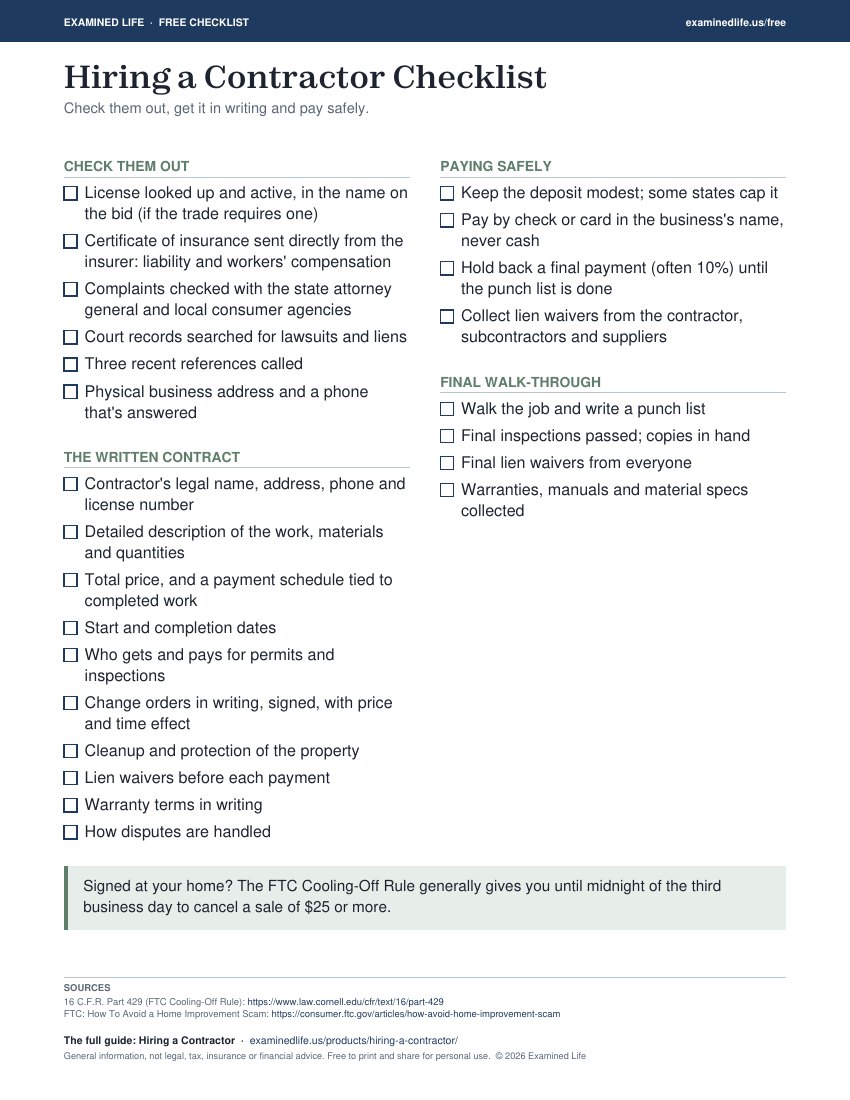
Get these in writing
- The contractor's legal name, address, phone and license number
- A detailed description of the work, materials, specifications and quantities
- The total price, or how price is figured for time-and-materials work
- A payment schedule tied to completed work, not dates
- Start and completion dates, and what happens if they're missed
- Who gets and pays for permits and inspections
- How change orders are made: written and signed, with the price and time effect
- Cleanup, debris removal and protection of your property
- Lien waivers from the contractor, subcontractors and suppliers before each payment
- Warranty terms
- Proof of insurance, attached
- How disputes are handled, and whether arbitration is required
- Your right to cancel, if the sale was made at your home
Pay safely
- Keep the deposit modest. Some states cap deposits for home improvement work.
- Tie each payment to a milestone you can see, such as framing passed inspection.
- Hold back a final payment (often 10%) until the punch list is done and final inspections pass.
- Pay by check or card in the business's name, never cash.
Why lien waivers matter
Contractors, subcontractors and suppliers who aren't paid can generally file a lien against your property, even if you paid the general contractor in full. Collect lien waivers from everyone who worked on or supplied the job, and keep a list of who they were.
Your right to cancel
Under the FTC's Cooling-Off Rule, if you agree to a sale of $25 or more at your home, or $130 or more at a temporary location, you generally have until midnight of the third business day to cancel. The seller must give you a cancellation form and refund within 10 business days. Many states add broader rights, especially for storm repairs.
Oklahoma doesn't license general contractors or remodelers statewide. Plumbing, electrical and mechanical trades are licensed through the Construction Industries Board, and roofers must register. Cities may add their own requirements.
The law behind this
- 16 C.F.R. Part 429FTC Cooling-Off Rule.
- 42 O.S. §§ 141-143.1Oklahoma mechanics' and materialmen's lien rights.
- 59 O.S. § 1151.1 et seq.Oklahoma roofing contractor registration.
- FTC: How To Avoid a Home Improvement ScamThe FTC's consumer guide.
Common questions
How much should a contractor deposit be?
Keep it modest and check your state's rules; some states cap home improvement deposits. Tie later payments to completed work.
What is a lien waiver?
A signed release in which a contractor, subcontractor or supplier gives up lien rights for work it has been paid for.
General information, not legal, tax or financial advice. Laws, fees and deadlines change; confirm anything time-sensitive with the agency, court or a professional.