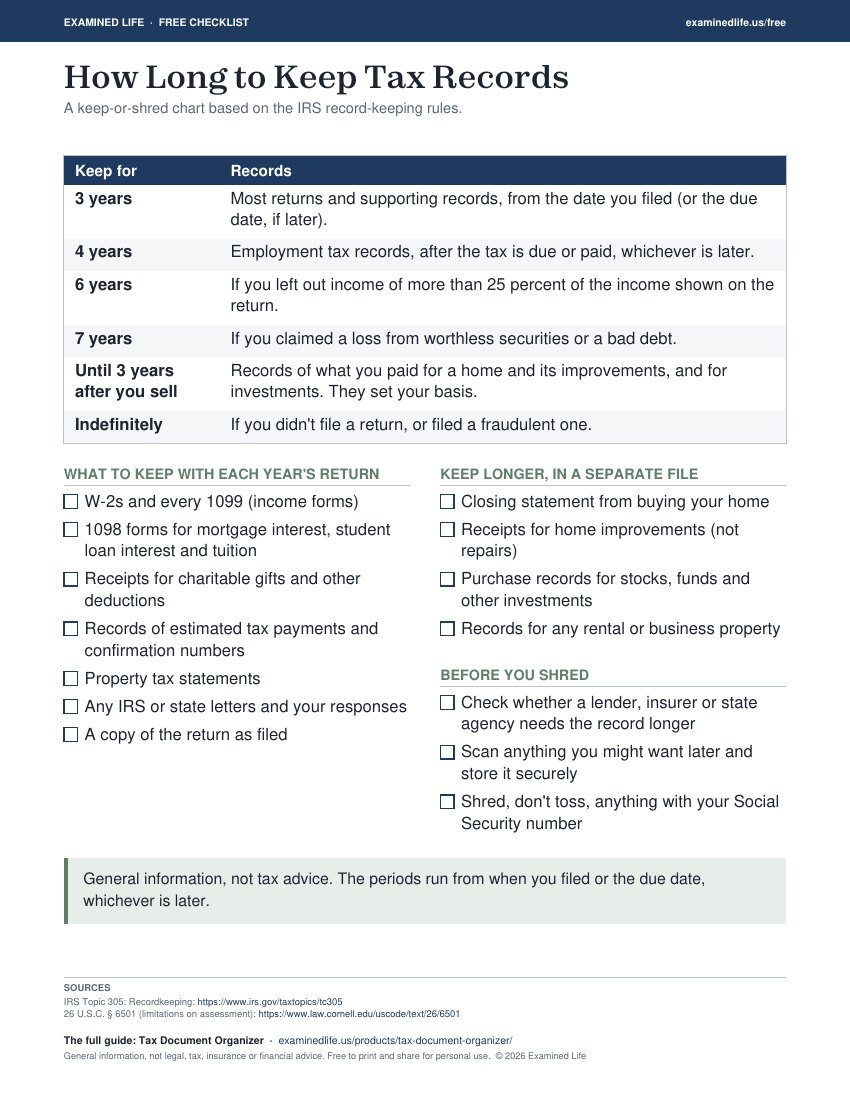
How Long to Keep Tax Records
The IRS rules on how long to keep returns, receipts and home records, from three years to indefinitely, in one chart.
Updated November 11, 2026 · Examined Life
How long you keep a tax record depends on how long the IRS has to question the return it supports. For most people, that's three years. Some situations stretch it longer, and a few records should stay in your files until long after you sell what they relate to.
The chart
| Keep for | Records |
|---|---|
| 3 years | Most returns and supporting records, from the date you filed (or the due date, if later). |
| 4 years | Employment tax records, after the tax is due or paid, whichever is later. |
| 6 years | If you left out income of more than 25 percent of the income shown on the return. |
| 7 years | If you claimed a loss from worthless securities or a bad debt. |
| Until 3 years after you sell | Purchase and improvement records for your home, and purchase records for investments, because they set your basis. |
| Indefinitely | If you didn't file a return or filed a fraudulent one. |
Why home and investment records last longer
When you sell a house or a stock, your gain is the sale price minus your basis: what you paid plus, for a home, the cost of improvements. The records that prove your basis matter for the return that reports the sale, so keep them for at least three years after that return is filed.
What to keep with each year's return
- W-2s and every 1099
- 1098 forms for mortgage interest, student loan interest and tuition
- Receipts for charitable gifts and other deductions
- Records of estimated tax payments
- Property tax statements
- IRS or state letters and your responses
- A copy of the return as filed
Other rules can be longer. A lender, insurer or state tax agency may want a record kept longer than the IRS does, so check before you shred.
The law behind this
- 26 U.S.C. § 6501Limitations on assessment and collection.
- IRS Topic 305: RecordkeepingThe IRS's own summary of these periods.
Common questions
Should I keep old tax returns forever?
The IRS periods above apply to the supporting records. Many people keep a copy of each filed return longer because it helps with future returns, amended returns and loan applications.
Are scanned copies OK?
Generally yes, as long as they're legible and complete. Keep them backed up and secure.
General information, not legal, tax or financial advice. Laws, fees and deadlines change; confirm anything time-sensitive with the agency, court or a professional.