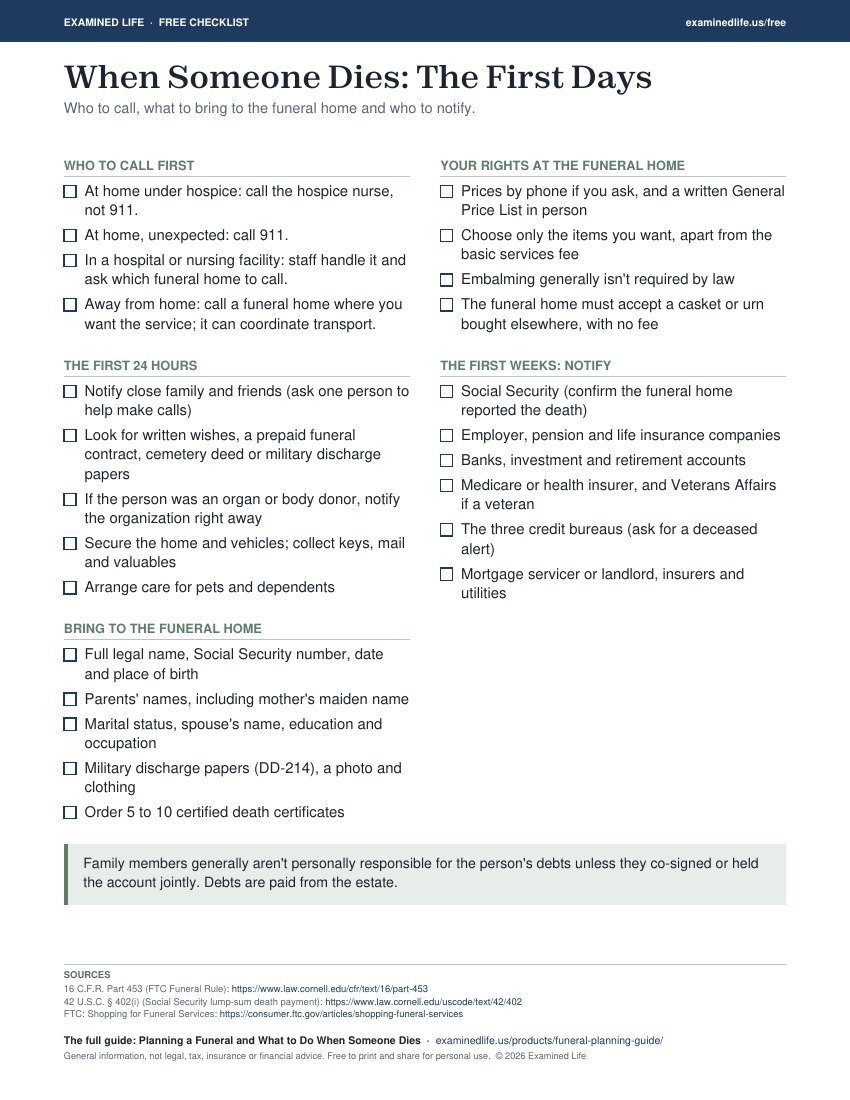
What to Do When Someone Dies: The First Days
Who to call first, what to bring to the funeral home, how many death certificates to order and who to notify in the first weeks.
Updated November 11, 2026 · Examined Life
Very little has to happen in the first hour. You can take time to sit with your loved one, call family and gather yourself before calling a funeral home. This is the order most families follow.
Who to call first
| If the death happened | Call |
|---|---|
| At home, under hospice care | The hospice nurse, not 911. The nurse confirms the death and helps with next steps. |
| At home, unexpected | 911. Emergency responders and possibly the medical examiner will be involved. |
| In a hospital or nursing facility | Staff handle the pronouncement and ask which funeral home to call. |
| Away from home | A funeral home where you want the service. It can coordinate transport. |
The first 24 hours
- Notify close family and friends. Ask one person to help make calls.
- Look for written funeral wishes, a prepaid funeral contract, a cemetery deed or military discharge papers before choosing a funeral home.
- If the person was an organ or body donor, notify the organization right away.
- Secure the home and vehicles, and arrange care for pets and dependents.
At the funeral home
Bring the person's full legal name, Social Security number, date and place of birth, parents' names (including mother's maiden name), marital status, education, occupation and any military discharge papers. The funeral director uses this to complete the death certificate.
Order more certified death certificates than you think you need. Many families need 5 to 10, for life insurance, banks, retirement accounts, vehicle titles and real estate.
The first weeks
- Social Security. The funeral home usually reports the death; confirm it did. A one-time $255 death payment may go to a surviving spouse or eligible child, and survivors may qualify for monthly benefits.
- Money and insurance. Employer and pension, life insurers, banks, investment and retirement accounts.
- Credit bureaus. Send a death certificate to Equifax, Experian and TransUnion and ask for a deceased alert to help prevent identity theft.
- Household. Mortgage servicer or landlord, insurers, utilities and the post office.
Family members generally aren't personally responsible for the person's debts unless they co-signed, held the account jointly or are responsible under another law. Debts are paid from the estate.
The law behind this
- 16 C.F.R. Part 453FTC Funeral Rule: your rights to prices and itemized choices.
- 42 U.S.C. § 402(i)Social Security lump-sum death payment.
Common questions
How many death certificates should I order?
Many families need 5 to 10 certified copies. Some institutions will accept a copy and return the original; ask.
Do I have to call 911 if someone dies at home?
Not if the person was under hospice care; call the hospice nurse. For an unexpected death at home, call 911.
General information, not legal, tax or financial advice. Laws, fees and deadlines change; confirm anything time-sensitive with the agency, court or a professional.